
[]



By:
Matteo Tittarelli
Category Comparison
Category Comparison
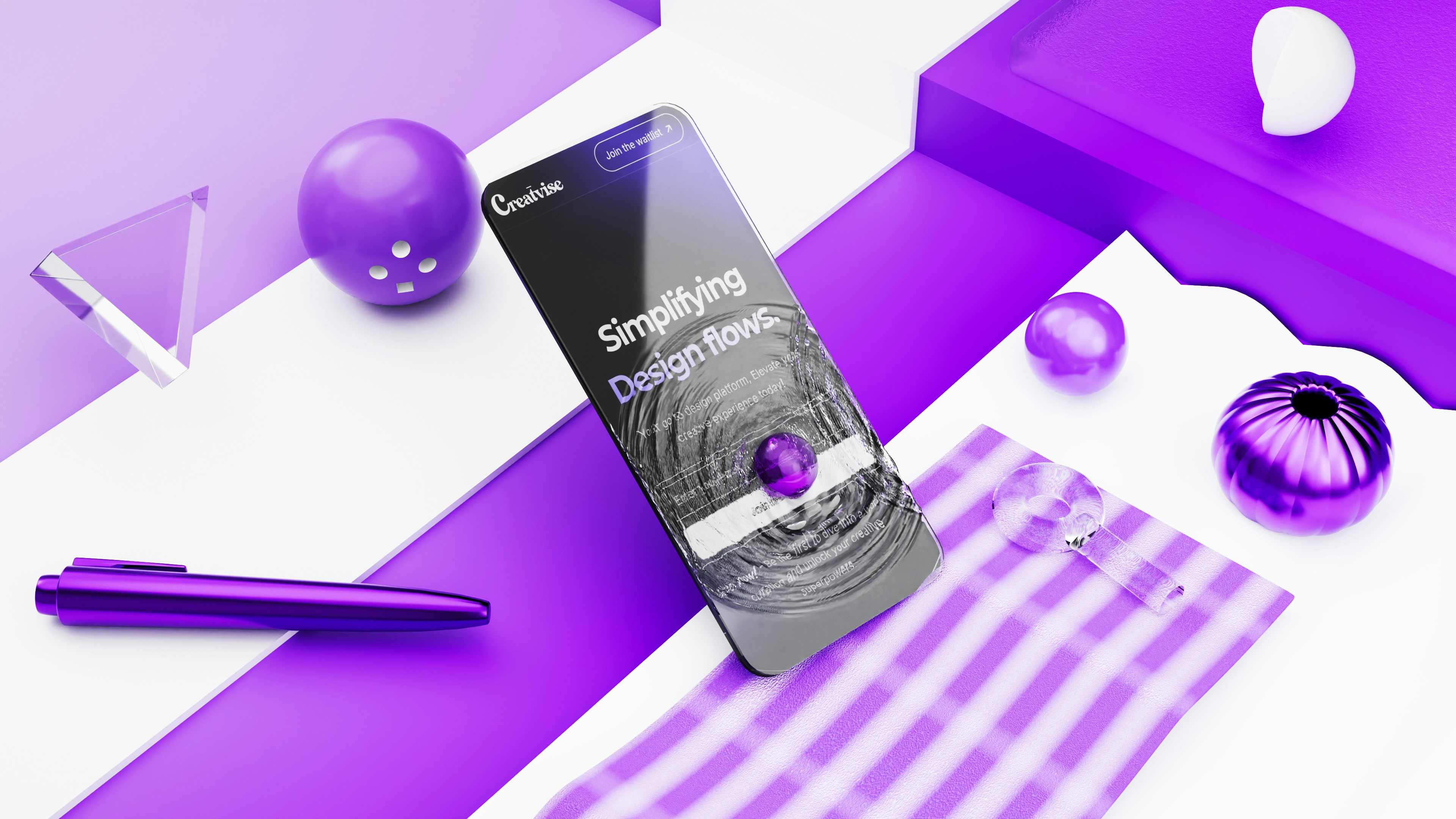
B2B SaaS landing pages serve as the critical conversion point between marketing efforts and pipeline generation. For Series A+ companies scaling their go-to-market operations, landing pages must combine clear positioning, technical precision, and AI-powered personalization to convert qualified traffic into revenue. Working with a GTM consultant who understands these elements can accelerate results significantly.
Key Takeaways
Clear positioning and differentiated messaging form the foundation of high-converting B2B SaaS landing pages, requiring alignment between your value proposition and target audience pain points.
AI-powered personalization has advanced alongside long-context LLMs. Some production models now support up to 2 million tokens of context (e.g., Gemini 1.5 Pro), compared with 4,096-token limits common in earlier GPT-era models—an increase of roughly ~500× over the 2020–2024 timeframe.
Social proof elements including case studies, customer logos, and testimonials build credibility essential for enterprise B2B purchasing decisions.
Technical SEO fundamentals—page speed, mobile responsiveness, and schema markup—directly impact both search visibility and conversion rates.
Lead capture forms require strategic simplicity; progressive profiling and clear privacy policies reduce friction while maintaining data quality.
A/B testing and analytics infrastructure enables continuous optimization through data-driven iteration rather than assumption-based changes.
Landing pages represent the intersection of positioning strategy, user experience, and technical execution. Companies that treat landing pages as strategic GTM assets rather than isolated marketing collateral consistently outperform competitors in conversion efficiency and customer acquisition costs.
Crafting Your Message: Clear Positioning for B2B SaaS Landing Pages
Positioning defines how your target audience perceives your product relative to alternatives in the market. For B2B SaaS landing pages, this means articulating a unique value proposition that immediately communicates problem-solution fit.
Effective positioning requires understanding your competitive landscape and identifying genuine differentiation points. Generic claims about being “innovative” or “cutting-edge” fail to resonate with sophisticated B2B buyers who evaluate multiple solutions simultaneously.
Key positioning elements for landing pages include:
A headline that addresses the primary pain point your target buyer experiences
Subheadline copy that explains your differentiated approach to solving that problem
Supporting statements that reinforce why your solution works better than alternatives
Clear articulation of who the product serves and who it does not
Product positioning frameworks help marketing teams systematically develop messaging that resonates with specific buyer personas. The framework should connect feature-level capabilities to business outcomes that matter to decision-makers.
B2B SaaS landing pages must communicate positioning within seconds of page load. Research indicates users form initial impressions extremely quickly, making above-the-fold messaging critical for retention and engagement.
The positioning statement should align with your broader GTM strategy and remain consistent across all touchpoints in the customer journey. Inconsistent messaging between landing pages, product pages, and sales conversations creates confusion that undermines conversion.
Visually Engaging Design: Optimizing UI/UX for Conversion
Visual design directly impacts how visitors process information and whether they take desired actions. B2B SaaS landing pages require design that balances aesthetic appeal with functional clarity.
Above-the-fold optimization priorities:
Primary headline and value proposition visible without scrolling
Single, clear call-to-action with contrasting visual treatment
Supporting visual element (product screenshot, illustration, or video) that reinforces the message
Clean layout with adequate white space to guide attention
Visual hierarchy determines how users scan and interpret page content. Strategic use of typography, color, and spacing directs attention toward conversion-critical elements while supporting information remains accessible but secondary.
Mobile responsiveness is non-negotiable for 2026 landing pages. With significant B2B research occurring on mobile devices, pages that fail to render properly on smaller screens lose qualified traffic immediately.
Loading speed is strongly associated with user abandonment and engagement outcomes; slower load times tend to increase bounce/abandonment risk. Landing page conversion statistics consistently demonstrate the relationship between technical performance and business outcomes.
Brand consistency across landing pages builds recognition and trust. Typography, color palettes, and visual elements should align with broader brand guidelines while optimizing for the specific conversion context.
Interactive elements like product tours, calculators, or configurators can increase engagement when implemented thoughtfully. These features should enhance understanding rather than create obstacles to conversion.
Compelling Copy: Writing for Impact and Engagement
Landing page copy must accomplish multiple objectives simultaneously: capture attention, communicate value, address objections, and motivate action. Every word should serve a strategic purpose.
Benefit-driven copy outperforms feature-focused messaging. Rather than listing product capabilities, effective landing pages translate features into outcomes that matter to the target buyer. “AI-powered analytics” becomes “reduce time-to-insight significantly.”
Headlines carry disproportionate weight in landing page performance. A strong headline addresses a specific pain point while creating curiosity about the solution. Weak headlines use generic industry language that fails to differentiate.
Effective copy structure for B2B SaaS landing pages:
Problem statement that validates the visitor’s challenge
Solution introduction that explains your approach
Proof points that demonstrate credibility and results
Clear call-to-action that reduces friction
Scannability matters for B2B audiences who research multiple solutions simultaneously. Break long paragraphs into digestible sections. Use bullet points for feature lists and benefits. Bold key phrases that communicate essential information.
Persuasive language should feel authentic rather than manipulative. B2B buyers are sophisticated; hyperbolic claims damage credibility more than they generate interest. Specific, verifiable statements build trust.
CTAs require careful attention to language and placement. “Get Started” performs differently than “See Pricing” or “Book a Demo.” The appropriate CTA depends on where visitors are in their buying journey and what action makes sense for your sales process.
Working with experts who understand copywriting and content for B2B contexts ensures landing page messaging aligns with broader marketing strategy and sales enablement needs.
Social Proof and Trust Signals: Building Credibility for B2B
Social proof reduces perceived risk for B2B buyers making significant purchasing decisions. Landing pages must demonstrate that credible organizations have successfully adopted your solution.
Essential social proof elements:
Customer logos from recognizable companies in your target market
Specific testimonials with attribution (name, title, company)
Case studies with quantified outcomes and implementation context
Industry awards and recognition from credible third parties
Security certifications and compliance badges relevant to your buyers
Customer logos create immediate credibility signals. Prioritize logos that your target audience will recognize and respect. A landing page targeting enterprise financial services should feature different logos than one targeting mid-market technology companies.
Testimonials with specificity outperform generic endorsements. “Great product, highly recommend” provides minimal value. “Reduced our sales cycle significantly within six months” gives prospects concrete evidence of potential outcomes.
Case studies deserve prominent placement on landing pages targeting evaluation-stage buyers. Link to detailed case studies while featuring key metrics and outcomes directly on the landing page itself.
Trust badges for security, privacy, and compliance address specific objections common in B2B evaluation processes. SOC 2, GDPR compliance, and industry-specific certifications reduce friction for buyers concerned about risk.
Review platform ratings from G2, Capterra, or TrustRadius can provide third-party validation, but buyers should still assess review quality (sample size, recency, relevance, and moderation signals vary by platform).
Position social proof strategically throughout the page. Logos work well near the top to establish credibility immediately. Testimonials support specific claims in the body. Case study links near CTAs help visitors who need additional validation before converting.
Lead Capture Forms: Designing for Optimal Conversion Rates
Form design directly impacts conversion rates by increasing or reducing friction in the submission process. B2B SaaS landing pages must balance data collection needs with user experience.
Form field optimization principles:
Request only information essential for immediate follow-up
Use clear, specific field labels that eliminate ambiguity
Implement inline validation to catch errors before submission
Make required versus optional fields visually distinct
Shorter forms generally convert better, but quality matters more than quantity for B2B leads. A form capturing company size, role, and use case may generate fewer submissions than a simple email capture—but those submissions are more valuable for sales follow-up.
Progressive profiling allows landing pages to collect additional information over time without overwhelming first-time visitors. Initial capture forms stay minimal while subsequent interactions gather qualifying details.
Privacy policy placement and language matter. Link to your privacy policy near form fields. For EU/EEA visitors, you need a lawful basis under GDPR to process form data (e.g., consent, contract necessity, legitimate interests—depending on the use case). Additional consent requirements may apply for certain marketing communications and tracking, depending on jurisdiction and implementation.
Submit button copy should describe what happens next. “Download the Guide” sets clearer expectations than “Submit.” Visitors want to know what they receive in exchange for their information.
Thank-you page experience continues the conversion journey. Effective thank-you pages confirm the action, deliver promised content immediately, and suggest logical next steps—whether that’s exploring additional resources or booking a conversation.
Form placement requires testing for your specific audience and offer. Some landing pages perform better with forms above the fold; others convert higher with forms placed after substantial value demonstration.
A/B Testing and Analytics: Iterating for Peak Performance
Continuous optimization separates high-performing landing pages from static assets that decay over time. A/B testing and analytics infrastructure enables systematic improvement based on actual user behavior.
Essential analytics implementation:
Page-level conversion tracking with clear goal definitions
User behavior analysis through heatmaps and session recordings
Traffic source attribution to understand channel-specific performance
Form analytics to identify abandonment points
A/B testing requires statistical rigor to produce meaningful results. Testing headline variations against each other with adequate sample sizes reveals genuine performance differences rather than random variation.
Prioritize tests based on potential impact. Headlines, CTAs, and hero sections typically produce larger conversion lifts than minor copy changes in supporting sections. Focus testing resources on high-leverage elements first.
Heatmap tools visualize where visitors actually focus attention versus where you expect them to look. This data often reveals disconnects between design intent and user behavior that inform optimization priorities.
Session recordings provide qualitative context that complements quantitative metrics. Watching actual visitors interact with landing pages surfaces friction points that aggregate data obscures.
Data-driven decision making requires discipline to avoid premature conclusions. Let tests run to statistical significance before implementing changes. Document hypotheses, results, and learnings to build institutional knowledge.
Iterative improvement compounds over time. A landing page that converts 3% better each quarter through systematic testing dramatically outperforms a static page within 12-18 months. The investment in testing infrastructure pays substantial returns.
Integrating AI for Enhanced Landing Page Personalization
AI capabilities for landing page personalization have advanced dramatically alongside long-context LLMs. Some production models now support up to 2 million tokens of context (e.g., Gemini 1.5 Pro), compared with 4,096-token limits common in earlier GPT-era models—an increase of roughly ~500× over the 2020–2024 timeframe (model availability and limits vary by provider and SKU).
Modern AI can analyze complete browsing histories, prior interactions, and behavioral patterns to deliver personalized landing page experiences. In research, authors introduced Infini-Transformer / Infini-attention, reporting a 114× compression ratio (vs. a Memorizing Transformers baseline) in their long-context language modeling experiments.
AI personalization applications for B2B SaaS landing pages:
Dynamic headline and messaging variations based on visitor segment
Personalized social proof featuring customers similar to the visitor’s company
Adaptive content ordering based on predicted interests
Real-time chatbot engagement with contextual understanding
Predictive lead scoring that adjusts form complexity
However, AI personalization comes with important caveats. Long-context capability doesn’t guarantee reliable use of all provided information. Multiple evaluations show that performance can drop significantly depending on where relevant information appears—often strongest at the beginning or end of the context and weaker when crucial details are in the middle.
This limitation has practical implications for landing page design. AI models recall information at the beginning and end of contexts more effectively than middle sections. When structuring content for AI-powered analysis or generation, place critical conversion elements at content boundaries. In practice, long contexts can be unevenly used: retrieval and reasoning quality depends on position effects, task design, and model architecture—so teams should validate “long-context” assumptions against their own conversion-critical tasks.
AI-powered GTM workflows can accelerate landing page creation and optimization when implemented with awareness of these limitations. The key is validating AI outputs against actual conversion performance rather than assuming AI recommendations automatically improve results.
Hybrid approaches combining human strategic judgment with AI execution currently produce the strongest outcomes. Use AI for variant generation, content drafting, and behavioral analysis while maintaining human oversight for strategic decisions and quality control.
The GTM Engineer School teaches practical AI implementation for marketing workflows, including landing page optimization techniques that leverage these capabilities responsibly.
Technical SEO Essentials: Ensuring Discoverability and Performance
Technical SEO determines whether landing pages appear in search results and how they perform once visitors arrive. For B2B SaaS companies targeting high-intent search queries, technical excellence is a competitive requirement.
Core technical SEO requirements:
Page speed optimization meeting Core Web Vitals thresholds
Mobile-first responsive design that renders properly across devices
Proper meta title and description tags optimized for click-through
Schema markup that helps search engines understand page content
Clean URL structure with relevant keywords
Page speed impacts both search rankings and conversion rates. Google’s page experience signals combine Core Web Vitals as ranking factors, and slow pages lose visitors before they engage with content regardless of SEO considerations.
Schema markup can help search engines interpret your content (and can enable rich results where eligible). For B2B SaaS pages, Organization and Product schema are common fits. Note that Google has limited FAQ rich results for many sites, and Review markup must follow policies (including restrictions on self-serving reviews).
Programmatic SEO strategy enables B2B SaaS companies to scale landing page creation for long-tail keyword targeting. This approach requires careful technical implementation to avoid duplicate content issues and ensure proper indexation.
Crawlability fundamentals:
XML sitemap including all indexable landing pages
Proper canonical tags preventing duplicate content issues
Internal linking structure that distributes authority appropriately
Robots.txt configuration that doesn’t accidentally block important pages
Meta descriptions have no effect on your rankings but significantly affect click-through rates from search results. Write compelling descriptions that accurately represent page content and encourage qualified visitors to click.
Title tags require careful optimization balancing keyword targeting with click appeal. Front-load important keywords while maintaining natural readability. Avoid keyword stuffing that triggers spam signals.
Technical SEO audits should occur regularly as sites evolve. New pages, design changes, and platform updates can introduce technical issues that degrade performance. Monitoring tools catch problems before they significantly impact traffic.
Go-to-Market Alignment: Landing Pages as a GTM Accelerator
Landing pages function as GTM accelerators when integrated into broader go-to-market strategy rather than treated as isolated marketing assets. Alignment between landing pages, sales processes, and product positioning multiplies their effectiveness.
GTM alignment considerations:
Landing page messaging consistent with sales conversation narratives
Lead capture fields that collect information sales teams actually use
Traffic sources and landing page content matched appropriately
Conversion paths that reflect realistic buyer journeys
Product launches require dedicated landing pages optimized for announcement context. These pages differ from evergreen product pages—they emphasize newness, explain the opportunity, and create urgency appropriate for launch timing.
Sales enablement materials should reference landing pages and vice versa. When prospects experience consistent messaging across marketing landing pages and sales conversations, trust builds faster and cycles shorten.
Product-led growth strategies require landing pages optimized for self-service conversion. These pages prioritize immediate value delivery—free trials, freemium access, or interactive demos—rather than sales-qualified lead capture.
Lifecycle marketing integration extends landing page value. Visitors who don’t convert immediately should enter nurture sequences. Landing page behavior informs segmentation and personalization in subsequent touchpoints.
Landing pages for different funnel stages serve different purposes. Top-of-funnel pages educate and build awareness. Mid-funnel pages address evaluation criteria and competitive differentiation. Bottom-funnel pages remove final objections and facilitate purchase decisions.
Working with GTM consultants who understand the complete customer journey ensures landing pages contribute to revenue outcomes rather than generating disconnected metrics. The goal isn’t traffic or even conversions—it’s qualified pipeline that closes.
Explore the marketing tools directory for platforms that support landing page creation, optimization, and analytics across each component discussed in this guide.
Frequently Asked Questions
What is the single most important component for a B2B SaaS landing page in 2026?
Clear positioning remains the foundational element. Without differentiated messaging that resonates with your target audience’s specific pain points, other optimizations produce diminishing returns. Strong positioning informs every subsequent decision—from visual design to copywriting to social proof selection.
How can AI be leveraged to improve B2B SaaS landing page performance?
AI enables dynamic personalization, content optimization, and behavioral analysis at scale. However, current AI systems have documented limitations—long contexts can be unevenly used depending on position effects, task design, and model architecture. Use AI for variant generation and analysis while maintaining human oversight for strategic decisions and quality assurance.
Are long-form or short-form landing pages more effective for B2B SaaS?
The optimal length depends on offer complexity, buyer sophistication, and funnel stage. High-consideration enterprise purchases typically require more information than SMB transactional decisions. Test both approaches with your specific audience rather than assuming one format universally outperforms the other.
What are common mistakes to avoid on B2B SaaS landing pages?
Common mistakes include generic positioning that fails to differentiate, excessive form fields that create friction, missing social proof that leaves credibility gaps, slow page load speeds that lose visitors, and disconnection between landing page messaging and subsequent sales conversations.
How often should B2B SaaS landing pages be updated or A/B tested?
Continuous testing produces better results than periodic overhauls. Run A/B tests consistently, prioritizing high-impact elements like headlines and CTAs. Major positioning updates should occur when market conditions shift, competitive landscape changes, or product capabilities evolve significantly.
Other Blogs:













Explore more articles


















Extract key points