[]



By:
Matteo Tittarelli
Tool Alternatives
Tool Alternatives
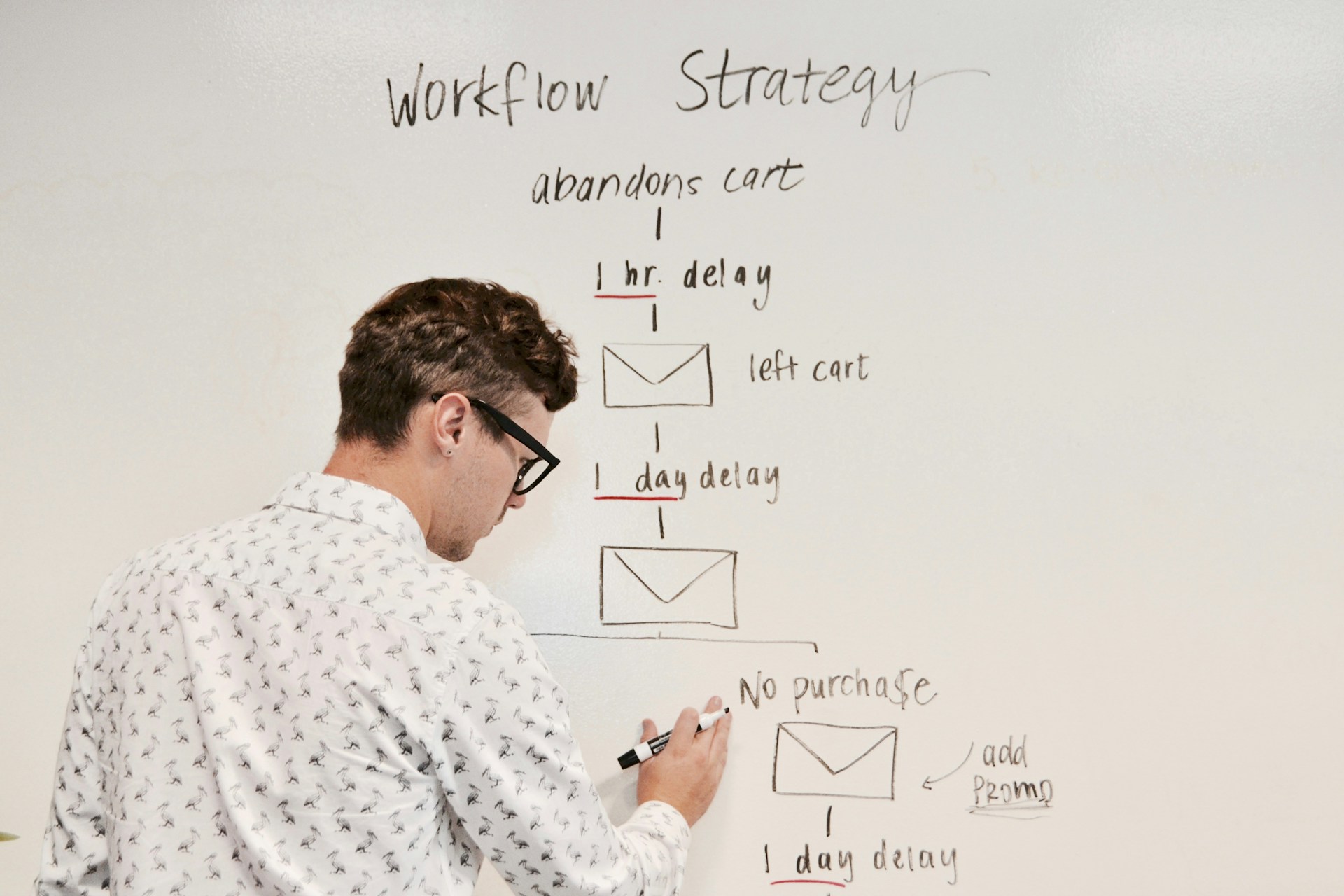
While ActiveCampaign serves 180,000+ businesses with sophisticated marketing automation, its steep learning curve, contact-based pricing, and lack of a free plan push many B2B SaaS companies toward alternatives. From HubSpot’s all-in-one CRM ecosystem to Brevo’s budget-friendly unlimited contacts model, these seven platforms address specific gaps in ActiveCampaign’s offering—whether you need simpler implementation, predictable pricing, or specialized e-commerce capabilities that align with your go-to-market strategy.
Key Takeaways
Email deliverability varies across platforms, with independent tests showing different results—ActiveCampaign typically scores highest, which can translate to revenue impact on high-volume campaigns
Pricing models determine long-term scalability: ActiveCampaign’s Plus tier becomes noticeably more expensive as contact lists grow, while Brevo’s unlimited-contacts model remains comparatively budget-friendly at similar scales—a gap that compounds over time
Free plans eliminate evaluation friction: HubSpot, Brevo, Mailchimp, and GetResponse offer permanent free tiers, while ActiveCampaign provides only a 14-day trial—critical for resource-constrained Series A teams testing platforms
Integration ecosystems shape operational complexity: HubSpot’s 1,300+ integrations exceed ActiveCampaign’s 900+, reducing middleware requirements for companies with complex tech stacks
All-in-one platforms reduce tool sprawl: HubSpot’s native CRM eliminates 3-5 separate tool subscriptions, while specialized platforms like Klaviyo excel in e-commerce but require additional tools for B2B SaaS use cases
The email marketing and automation landscape has evolved significantly in 2025, with B2B SaaS companies demanding more than powerful automation—they need predictable pricing, rapid implementation, and seamless integration with existing GTM infrastructure. ActiveCampaign maintains its 4.5/5 G2 rating from 14,400+ reviews and industry-leading deliverability, yet seven alternatives consistently outperform it in specific scenarios that matter to scaling companies.
For B2B SaaS teams implementing product-led growth strategies or building lifecycle marketing programs, selecting the right platform requires understanding each tool’s strengths, pricing implications, and integration capabilities. This analysis examines how each alternative serves different company maturity stages and use cases.
1. HubSpot — All-in-One CRM and Marketing Platform
HubSpot emerges as the most comprehensive ActiveCampaign alternative for B2B SaaS companies seeking unified sales, marketing, and service capabilities in a single ecosystem. The platform eliminates tool sprawl while providing enterprise-grade features through its Marketing Hub.
Key Features:
Native CRM with sales, service, and content management built-in
1,300+ integrations across business tools
Lead scoring and predictive analytics for ABM strategies
Built-in CMS for landing pages and blog content
Comprehensive free plan with essential marketing features
6,773 solution partners for implementation support
Pricing Structure:
Free Tools: $0/month (core CRM + basic marketing tools)
Marketing Hub Starter: $20/month (entry-level marketing features; pricing based on a small contact tier, billed annually)
Marketing Hub Professional: $890/month (advanced automation & multi-channel campaigns; includes a larger contact bundle)
Marketing Hub Enterprise: $3,600/month (enterprise-grade features and higher contact limits, billed annually)
The platform’s unified approach supports go-to-market architecture frameworks, enabling marketing, sales, and customer success teams to operate from a single source of truth. HubSpot Marketing Hub earns a 4.5/5 G2 rating from 14,200+ reviews with users consistently praising the intuitive interface.
However, email deliverability varies across platforms—for companies running high-volume outbound campaigns, this is an important consideration. For teams prioritizing platform consolidation, the trade-off often makes sense.
For detailed implementation guidance, see Genesys Growth’s HubSpot guide covering automation workflows, CRM configuration, and lifecycle marketing setup.
2. Brevo — Budget-Friendly Automation with Unlimited Contacts
Brevo (formerly Sendinblue) represents the most cost-effective ActiveCampaign alternative for B2B SaaS companies prioritizing budget predictability over advanced automation complexity.
Standout Capabilities:
Unlimited contacts on all plans—pay only for email volume
SMS marketing included without add-on fees
Transactional email API for product notifications
Basic CRM functionality built-in
Free plan with 300 emails/day
Marketing automation builder for drip campaigns
Pricing Structure:
Free: $0/month (300 emails/day, large contact storage, 1 user)
Starter: from $9/month (removes daily send cap; higher monthly email limits)
Standard: from $18/month (adds advanced automation, A/B testing, better reporting)
Professional: from $499/month (for high-volume, data-driven campaigns and larger teams)
Enterprise: Custom pricing (unlimited users and advanced enterprise features)
The platform earns a 4.5/5 G2 rating from 2,400+ reviews with users praising value and simplicity. The primary trade-off involves 66 integrations versus ActiveCampaign’s 900+, limiting flexibility for companies with complex tech stacks. Additionally, according to third-party comparisons, Brevo’s deliverability has been measured at 74.7%—users should consult recent independent studies for current data.
For Series A companies implementing demand generation programs with constrained budgets, Brevo’s unlimited contacts model removes growth anxiety while providing adequate automation for foundational campaigns.
3. Klaviyo — E-Commerce Email and SMS Specialist
Klaviyo dominates the e-commerce marketing automation space with deep platform integrations and revenue attribution capabilities that ActiveCampaign lacks natively.
Core Strengths:
Deep Shopify, WooCommerce, and Magento integrations
Product-level revenue tracking per campaign
Predictive customer lifetime value scoring
Abandoned cart and post-purchase automation
350+ integrations across e-commerce tools
SMS marketing with conversation capabilities
Pricing Structure:
Free: $0/month (up to 250 active profiles, 500 email sends/month, 150 SMS/MMS credits, email support for first 60 days)
Email plan: starting at $45/month (example card: 15,000 email sends/month; pricing scales with active profiles and send volume)
Email + mobile messages plan: starting at $60/month (example card: 15,000 email sends + 1,250 mobile message credits/month; pricing scales with profiles and credits)
Klaviyo earns a 4.6/5 G2 rating from 1,100+ reviews, with e-commerce teams praising its revenue attribution and behavioral segmentation. The platform excels at connecting email performance directly to purchase data.
For B2B SaaS companies with product-led growth models that include transactional or subscription e-commerce components, Klaviyo provides capabilities ActiveCampaign requires third-party integrations to match. However, the platform’s e-commerce focus makes it less suitable for pure B2B SaaS use cases lacking product catalog functionality.
Teams implementing PLG metrics dashboards can leverage Klaviyo’s predictive analytics for customer retention strategies, though integration with B2B-specific tools may require additional configuration.
4. Mailchimp — Beginner-Friendly Email Marketing
Mailchimp remains the accessibility benchmark for email marketing, offering the simplest user interface and fastest time-to-value among ActiveCampaign alternatives.
Ease-of-Use Features:
Intuitive drag-and-drop email builder
300+ pre-designed templates
Free plan with 500 contacts
Guided campaign setup for beginners
300+ integrations with popular business tools
Basic automation with customer journeys
Pricing Structure:
Free: $0/month (up to 500 contacts with basic features)
Essentials: from $13/month (for ~500 contacts; core email + templates, limited automation)
Standard: from $20/month (for ~500 contacts; more automation and optimization tools)
Premium: from $350/month (for ~10,000 contacts; advanced segmentation, reporting, and higher limits)
The platform earns a 4.3/5 G2 rating from 12,800+ reviews, with users consistently citing the simple UI as the primary strength. For marketing teams without dedicated email specialists, Mailchimp delivers campaigns without the learning curve ActiveCampaign demands.
The trade-off involves limited automation depth—basic workflows versus ActiveCampaign's unlimited triggers and actions. For B2B SaaS companies running sophisticated multi-touch campaigns, Mailchimp's simplicity becomes a constraint rather than a benefit.
For teams building foundational content operations, Mailchimp provides adequate email distribution while they develop more sophisticated automation requirements.
5. Drip — E-Commerce CRM with Subscription Focus
Drip specializes in e-commerce customer relationship management, making it the preferred ActiveCampaign alternative for B2B SaaS companies with subscription or product commerce components.
E-Commerce CRM Features:
Revenue-focused customer segmentation
100+ e-commerce integrations
Subscriber lifecycle management
Visual workflow builder
Pre-built automation templates
Lead scoring based on purchase behavior
Pricing Structure:
14-day free trial: $0 (full-featured trial)
Main Plan: from $39/month (includes unlimited email sends for up to ~2,500 people; price scales with list size)
Custom enterprise pricing available
Drip maintains a 4.4/5 G2 rating from 460+ reviews, with users praising its e-commerce workflow templates and revenue tracking capabilities. The platform bridges email marketing and CRM functionality specifically for product-focused businesses.
The primary limitation involves its e-commerce orientation—B2B SaaS companies without product catalogs find fewer relevant automation templates. Additionally, the absence of a free plan creates evaluation friction for budget-conscious teams.
For companies implementing account-based marketing strategies alongside e-commerce funnels, Drip provides specialized capabilities that generalist platforms like ActiveCampaign address through integrations rather than native features.
6. GetResponse — Webinar-Enabled Marketing Automation
GetResponse differentiates through built-in webinar functionality, making it the logical ActiveCampaign alternative for B2B SaaS companies using live events as primary lead generation channels.
Webinar-First Platform:
Built-in webinar hosting up to 500+ attendees
500+ email templates
Marketing automation workflows
Landing page builder
200+ integrations
Free plan with 500 contacts
Pricing Structure:
Starter: from $19/month (AI-powered email marketing with unlimited sends for smaller lists)
Marketer: from $59/month (adds advanced automation, segmentation, ecommerce tools)
Creator: from $69/month (adds webinars, course creator, and content monetization features)
Enterprise: Custom pricing (tailored features with premium support and advanced capabilities)
GetResponse earns a 4.3/5 G2 rating from 1,100+ reviews, with users highlighting the integrated webinar platform as a key differentiator. For teams running product demos, thought leadership sessions, or customer education programs, the native webinar eliminates separate tool subscriptions.
The trade-off involves automation features locked behind higher tiers—basic plans focus on email while sophisticated workflows require upgraded subscriptions. ActiveCampaign provides more automation power at comparable price points.
B2B SaaS companies implementing lifecycle marketing programs that include webinar sequences benefit from GetResponse's unified approach, reducing the integration complexity of connecting separate webinar and email platforms.
7. Omnisend — Multi-Channel E-Commerce Marketing
Omnisend provides the most comprehensive multi-channel marketing for e-commerce, combining email, SMS, push notifications, and retargeting in a single platform without add-on fees.
Multi-Channel Capabilities:
Email, SMS, and web push notifications
Retargeting ad integration
Pre-built e-commerce workflows
Product recommendation engine
Advanced segmentation based on purchase behavior
Free plan for small lists
Pricing Structure:
Free: $0/month (up to 250 contacts, 500 emails/month, 500 web push notifications/month, and a one-time 60 SMS credits bundle)
Standard: $16/month regular price – or $11.20/month for the first 3 months when you pay 3 months upfront with the Starter Discount (up to 500 contacts)
Pro: $59/month regular price – or $41.30/month for the first 3 months when you pay 3 months upfront with the Starter Discount (up to 2,500 contacts)
Custom: Custom pricing (for larger contact lists or higher volumes)
Omnisend achieves a 4.6/5 G2 rating from 1,100+ reviews, with e-commerce teams praising the all-in-one channel approach. The platform eliminates the SMS add-on fees ActiveCampaign requires while adding push notifications and retargeting.
The primary constraint mirrors Klaviyo—e-commerce focus limits B2B SaaS applicability for companies without product catalogs. The platform excels for SaaS companies with physical product components or marketplace models.
For teams exploring multi-channel demand generation acceleration strategies, Omnisend demonstrates how unified platforms reduce operational overhead compared to stitching together ActiveCampaign with separate SMS and advertising tools.
Choosing the Right Alternative Based on Your Growth Stage
For B2B SaaS companies evaluating alternatives, success depends on matching platform capabilities to organizational maturity and specific use cases:
Series A (10-50 employees):
Recommended: Brevo Business or Mailchimp Standard
Budget: $500-2,000 annually
Implementation: 1-2 weeks maximum
Why: Predictable pricing, minimal learning curve, essential automation
Series B (50-200 employees):
Recommended: ActiveCampaign Plus or HubSpot Professional
Budget: $1,000-15,000 annually
Implementation: 2-4 weeks with dedicated onboarding
Why: Advanced automation justifies investment, team can absorb complexity
Series C+ (200+ employees):
Recommended: HubSpot Enterprise or ActiveCampaign Enterprise
Budget: $15,000+ annually
Implementation: 60-90 days with full onboarding
Why: Platform consolidation, enterprise features, dedicated support
E-Commerce SaaS:
Recommended: Klaviyo or Omnisend
Budget: Varies by send volume
Implementation: 1-2 weeks with e-commerce integration
Why: Native product tracking, revenue attribution, specialized workflows
Webinar-Driven GTM:
Recommended: GetResponse
Budget: $2,000-5,000 annually
Implementation: 1-2 weeks
Why: Integrated webinar platform eliminates tool fragmentation
For companies seeking expert guidance through platform selection and implementation, Genesys Growth's consulting provides hands-on support with weekly deliverables and embedded execution—accelerating time-to-value while avoiding common migration pitfalls.
Frequently Asked Questions
What are the primary reasons B2B SaaS companies look for ActiveCampaign alternatives?
Three factors drive most ActiveCampaign migrations: pricing unpredictability as contact lists grow (with Plus plans becoming comparatively costly even at modest list sizes), the steep learning curve frequently cited in critical reviews, and the lack of a free plan for ongoing evaluation.
How do I choose the best email marketing software for my specific business needs?
Start by mapping your primary use case: all-in-one platform consolidation (HubSpot), budget optimization (Brevo), e-commerce revenue tracking (Klaviyo), simplicity (Mailchimp), or webinar integration (GetResponse). Then evaluate integration requirements against your existing tech stack—HubSpot's 1,300+ integrations serve complex environments while Brevo's 66 integrations work for simpler stacks. Finally, project contact growth to understand long-term pricing implications.
Can free CRM software options compete with paid ActiveCampaign alternatives for small businesses?
HubSpot's free CRM provides substantial functionality for early-stage companies, including contact management, email tracking, and basic automation. For teams under 1,000 contacts, HubSpot Free plus Mailchimp Free or Brevo Free can deliver professional email marketing without subscription costs. However, as automation complexity increases—particularly for product-led growth implementations—paid tiers become necessary.
What role does email automation play in an effective B2B SaaS go-to-market strategy?
Email automation serves as the backbone of lifecycle marketing, handling onboarding sequences, nurture campaigns, expansion triggers, and retention programs at scale. ActiveCampaign's 900+ automation recipes demonstrate the sophistication modern GTM requires. For B2B SaaS companies, automated email supports product adoption (user activation), sales enablement (lead nurturing), and customer success (health scoring alerts).
Are there specific ActiveCampaign alternatives better suited for e-commerce, and why?
Klaviyo and Omnisend dominate e-commerce email because they provide product-level revenue attribution that ActiveCampaign lacks natively. Klaviyo's deep Shopify integration tracks individual product performance per campaign, while Omnisend adds SMS, push notifications, and retargeting without separate subscriptions. For B2B SaaS companies with product catalog or marketplace components, these specialized platforms outperform general-purpose alternatives.
How can Genesys Growth help my B2B SaaS company implement a new marketing automation or CRM solution?
Genesys Growth's consulting provides hands-on execution for platform selection, migration, and optimization. The Consultant Plan (from $8,500/month) includes custom product marketing scopes with weekly deliverables, covering lifecycle marketing setup, automation architecture, and sales enablement integration. The Fractional Plan (from $12,000/month) adds cross-channel strategy, tooling audits, and agency partner management for companies requiring comprehensive GTM restructuring.
Other Blogs:










Explore more articles












Extract key points